The AI scribe that never guesses a drug dose
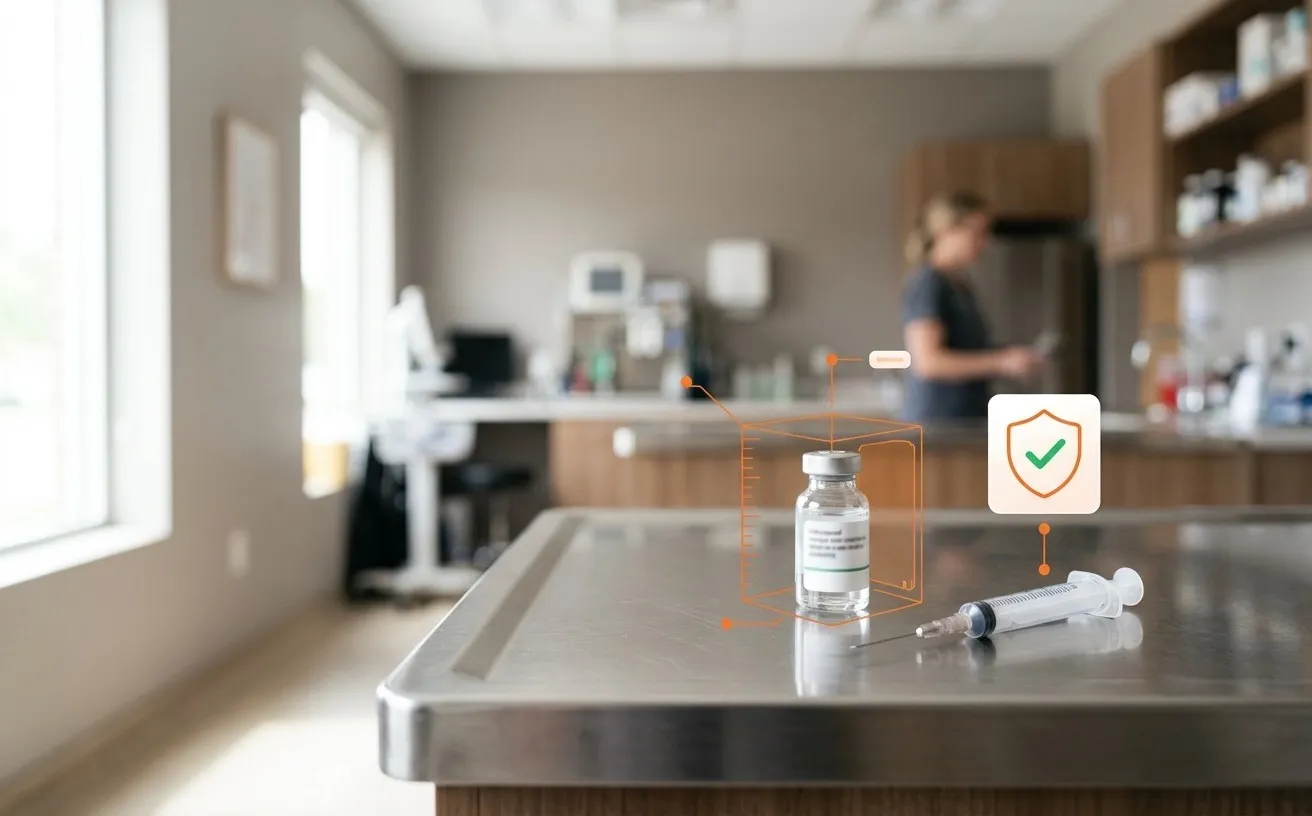
The AI never computes a dose. It only names the drug; a verified formulary does the maths, and flags anything it doesn't know.
AI that confidently gets it wrong
Large language models are built to produce fluent, plausible text, not verified arithmetic. When an AI scribe hands the whole note to the model, including the drug doses, it can return a number that looks right and is wrong. In general writing that is a typo; in a treatment plan it is a patient-safety risk. That single failure mode is why so many clinicians keep an AI scribe at arm's length: if you re-check every dose by hand, the tool hasn't saved you the work.
How VetDoze removes dose hallucination
The AI names the drug and route, nothing more
From your consult, the model identifies which medication you used and how it was given. It is never asked to decide the dose.
A deterministic engine computes the dose
The dosing engine calculates the exact dose and fluid rate from a verified formulary, using the patient's weight and species. The same inputs always produce the same, checkable result.
Unknown drugs are flagged, not invented
If a medication isn't in the formulary, VetDoze flags it for you to confirm rather than guessing a number.
You review and sign off
The full note and plan are editable. You stay in control and approve the record before it's saved.
What “verified” actually means here
Verified means the dose is produced by a deterministic calculation against a trusted veterinary formulary, not predicted by a model. Because the calculation is rule-based and weight- and species-aware, it is reproducible and auditable: you can trace why a number is what it is, and the same patient and drug always yield the same result. That is the difference between an AI scribe that writes about doses and one that computes them.
Why this matters most for exotics and emergencies
Dose errors are most dangerous exactly where generic AI tools are weakest: small exotic patients where milligrams matter, species with unusual pharmacology, and emergency drugs given by weight under time pressure. VetDoze's species-aware engine is built for these cases, so the hardest doses to get right are the ones it protects you on.
New to the category? Start with what a veterinary AI scribe isFrequently asked questions
Can an AI scribe hallucinate a drug dose?
Yes. Any AI scribe that lets a language model write the dose can produce a plausible-looking but incorrect number, because language models predict text rather than perform verified calculations. This is the main reason veterinarians are cautious about AI documentation. VetDoze is designed so the AI never computes a dose at all.
How does VetDoze make sure the doses are right?
VetDoze separates language from arithmetic. The AI's only job is to identify which drug and route you used. Every dose and fluid rate is then calculated by a deterministic engine against a verified formulary, using the patient's weight and species. The number is computed, not generated.
What happens if a drug isn't in the formulary?
VetDoze flags it instead of guessing. Rather than inventing a dose for an unrecognised drug, it tells you so you can confirm or add it. A blank you can see is far safer than a confident wrong number you can't.
Does this work for exotic and large-animal species?
Yes. The dosing engine is species-aware and supports dogs, cats, rabbits, birds, reptiles, and other exotic and large-animal species, exactly the cases where generic AI tools are most likely to get a dose wrong.
Can I edit the note and doses before saving?
Always. VetDoze drafts the SOAP note and fills the plan with computed doses, but everything is editable. You stay in control and sign off on the record before it is saved to the patient's history.
Review the dose, don't recalculate it
Let a verified formulary fill the plan while the AI writes the note. Free to start, no card required.